Wednesday, May 25, 2022

Root grafting

 This post is about my experimentation with root grafting of figs, mulberries, and apricots. In late February and early March of 2022 I had to root prune a number of my trees that were being migrated to a new orchard.  As a result, I had many root cuttings that were pretty healthy and I decided to experiment with using them as rootstocks.  I grafted the scions of figs, mulberries and apricots onto the corresponding root pieces.  Bellow are the pictures with the pieces of wood, roots, and the resulting plants.

Figs

Only two grafts were made, they both produced plants, and were planted in the new orchard just over 2 months after grafting.

The fig pictures below are from May 6, 2022


Mulberry 

The mulberries were grafted onto pieces of roots from a mature seedling mulberry. The following number of mulberries were grafted/ made to plants:

Buluklu 4/ 3
Easter Egg 1/ 0
Galicia 2/ 0
Isfahan 1/ 1
Tabriz 4/ 4
Taiwanese 2/ 2

Out of 14 root-grafted cuttings, I got 10 plants that were ready to be field-planted in 2 months.

Below are the pictures of the roots, scions, and the freshly grafted material.

It seems that the cleft grafts worked better than bark grafts, but the numbers are too low for any particular cultivar to make any conclusions on the best type of graft to use for the root grafting.
The pictures below are from the field planting of Tabriz and Taiwanese plants.  Grafted on February 26 and planted on May 6, 2022.

Tabriz
Taiwanese

Apricots

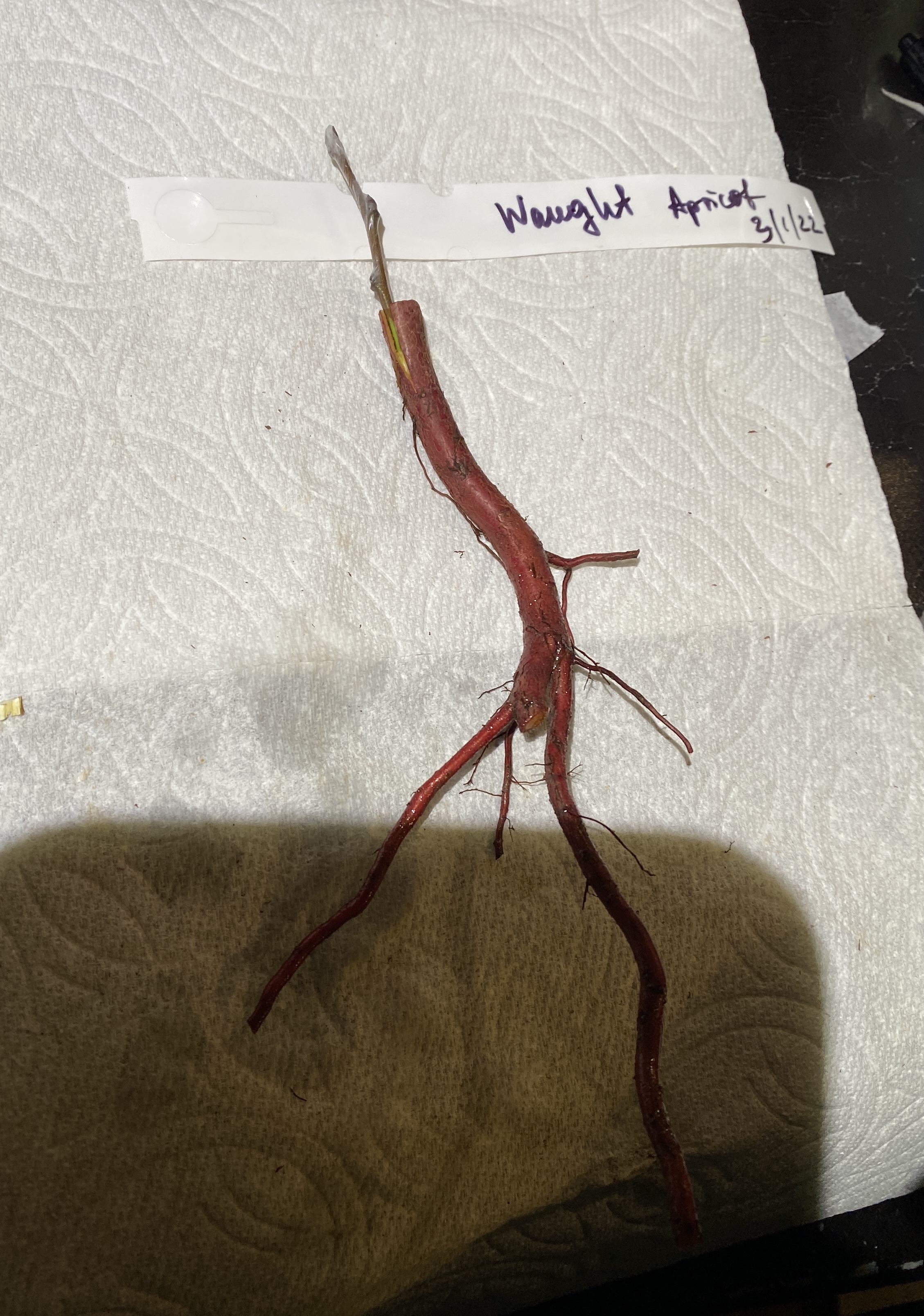
On March 1, 2022 the apricot scions were grafted onto the pieces of roots from mature apricot seedling. The following number of scions were grafted/ made to plants:

Aura's Mystery 2/ 1
Shekar Pareh  1/ 1
Waught 1/ 0
Peixote Blenheim - 1/ 1
Moniqui - 1/ 1
Hassan Krasnyi - 1/ 0
Altair 4 - 1/ 1
Ram Rock - 1/ 0
Routers Peach - 1/ 0

In total, 10 root pieces were grafted and 5 became successful plants.

Here are the pictures of the combinations that later became new plants:


And below are the combinations that failed.

From the above pictures, I do not see any correlations between the root piece size, amount of feeder roots, etc and the fate of the graft.  The failures are most likely due to inefficient connections between the stem and root cambial layers.

Below are a couple of successful plants that were field planted on May 13, 2022.

Check our sales site if we have the cuttings available reallygoodplants.com

Wednesday, April 13, 2022

Tasting mulberries: Skinner vs Himalayan DMOR9

 Skinner makes lager fruits that start ripening at least a week before Himalayan DMOR9. The leaf shapes are different too, see the picture below. In the taste test on April 13, 2022, DMOR9 fruits were significantly sweeter and more flavorful. Both plants are in pots and this is a preliminary evaluation. In the picture below, Skinner is on the left and DMOR9 is on the right.


On April 8, 2022 I posted a video about these and other long fruited mulberries https://youtu.be/CVLL18msS44

Check our sales site if we have the cuttings available reallygoodplants.com


Sunday, January 30, 2022

Reinking and Thong Dee Pomelos

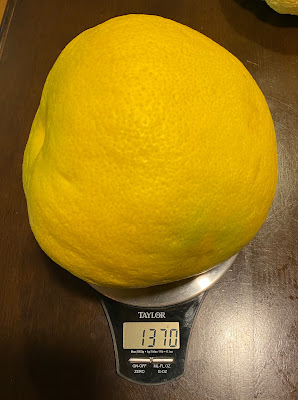
 Reinking was my most preferred pomelo until today when I tried Thong Dee the first time.  Reinking (1340 g) also needed a bit more time on the tree. Both fruits were pretty good, but Thong Dee (1370 g) is sweeter and juicier.

Reinking


Thong Dee


Sunday, December 26, 2021

Graft quality matters

In this post I describe how to identify good and bad graft joint unions, and why joint quality matters. 

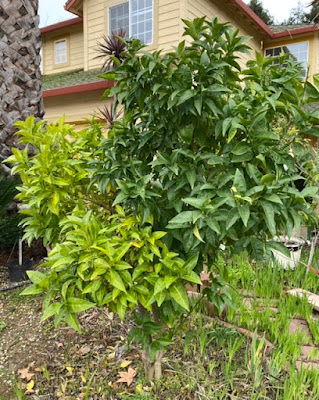
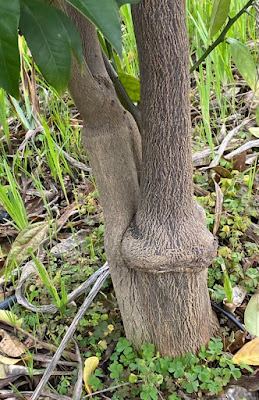
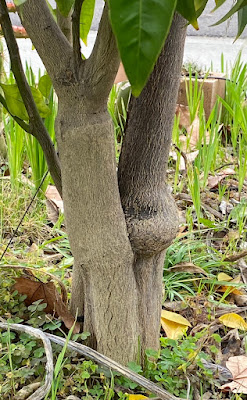
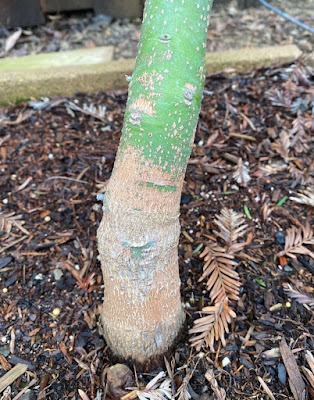
As we select plants in nurseries, it is important to inspect the graft joint.  This is the place where the scion meets rootstock.  Unfortunately, even some commercially produced plants from reputable suppliers may have problems with the graft quality. The performance of such plants will suffer and they may be short lived.  In the picture below is my Moro blood orange that I purchased years ago.  This tree never grew well. A couple of years ago after noticing sprouts from the rootstock, I grafted the scions from this tree onto the sprouts. The green portion of the tree (on the right) is from my new graft, and the yellowish part is the original tree.

The lower bulbous joint is what the tree came with. There is some structural problem which affects (most likely) the vascular transport in this part of the plant. The higher graft (left) that I made, seems to be more solid structurally and its vascular system supports the flow of nutrients to keep this part of the tree green. In the coming spring, I will remove the original graft and will leave only my grafts to form this tree.


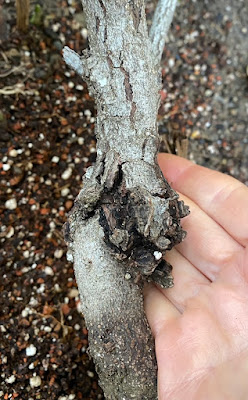
Persimmon grafts seem to be very sensitive to infections, if not properly healed. Below is a joint on a two year old, commercially purchased persimmon tree.  I do not think this tree can live for much longer.  I will need to re-graft it on new rootstock. 

An example of properly healed peach graft below:


An excellent avocado graft (2.5 years old), where the joint has almost disappeared:

An excellent plum graft (2.5 years old):

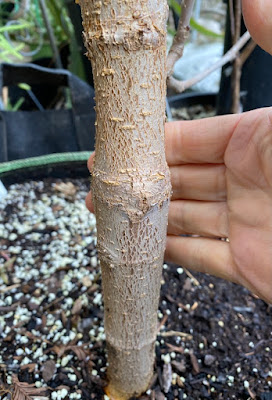
A 2 years old mulberry graft with almost disappeared joint:

The smother and the straighter the graft joint, the higher the chance that the tree will become a great performer.  

When choosing trees at nurseries, we should pay attention to the graft joint and select the best one.

Monday, December 13, 2021

Meyer and New Zealand Lemonade lemons

 These were picked from pretty young trees, ~2 years in the ground only. I wanted to evaluate NZ Lemonade, and the Meyer lemon seemed to be a good comparison candidate.  I heard the NZ lemonade is a low acid one. Meyer is also not the most sour lemon. 

In this comparison, Meyer seems to be pretty sour, as NZ Lemonade is almost acidless. It can be eaten like an orange.  It is actually very pleasant to eat, my family and I enjoyed it.


White sapotes Vernon, Suebelle, and Lemon Gold

 Out of these three cultivars, Lemon Gold tasted the best, followed by Vernon and then Suebelle. The Lemon Gold skin should be peeled as it is bitter. Lemon Gold has the most intense flavor with some caramel in it. It also seemed to be denser, in the texture. Vernon is mild and soft, but also very nice. Suebelle had some notes of not pleasant flavor.  The fruit could be past its prime time. 


Check our sales site if we have the cuttings available reallygoodplants.com

Sunday, December 12, 2021

Shirokolistvennyi satsuma mandarin

 I got this cultivar from CCPP only because it had Russian name.  "Shirokolistvennyi" means "Wide leafed".  The CCPP page says that it originated in the USSR. I wasn't impressed with the flavor last year, when it fruited the first time for me. However, it is different this year. I can taste the exact flavor of the mandarins, which we had in our New Year presents distributed through the Soviet schools in the 1970s (sponsored by the parents).  Those who grew there would know what I'm talking about, a mixed bag of candies, walnuts and a couple of mandarins.  Unfortunately, no photos of those bags are online, and if I would manage to find any, they would be black and white. Below are mine from today's tasting. The flavor is very nice, but the membranes are pretty hard now.  Maybe I should be tasting them earlier in the season.  I only had a few fruits from the graft on my Algerian Clementine.


BRIX and pH Values for Various Yangmei Cultivars

  I measured the BRIX and pH values for 9 different selection of yangmei on June 15, and for 5 selections on June 24. Whenever possible, 3 f...